
Reproduction of Prior Art
Controlled execution and characterization of prior-art examples where the resulting material matters.

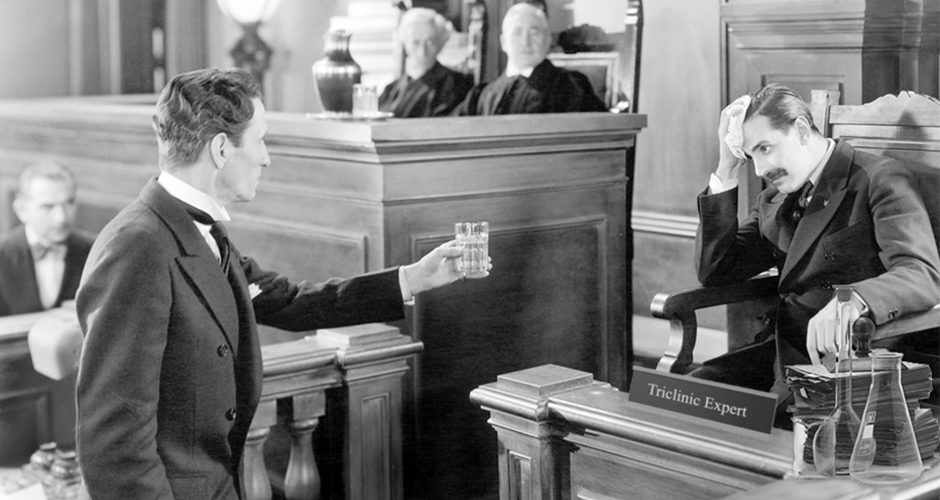
Paragraph IV and ANDA matters can depend on highly specific technical questions: whether a proposed product contains a claimed form, whether a method distinguishes relevant forms, whether a prior-art procedure is enabling in practice, whether a formulation or impurity profile matters, or whether a comparison has been made under scientifically appropriate conditions.
Triclinic supports these matters by designing and executing analytical work around the technical issue, then organizing data for counsel, CMC teams, formulation scientists, and experts.
The goal is disciplined scientific evidence. Triclinic does not provide legal conclusions about infringement, validity, or approval strategy.
The work starts by defining the legal or technical question under counsel or client direction. Triclinic then maps that question to measurable properties and selects methods that can answer it with appropriate specificity.
For solid-state disputes, a defensible answer often requires a combination of XRPD, thermal analysis, spectroscopy, microscopy, moisture analysis, chromatography, structure determination, or other methods. The point is not to generate more data; it is to generate the right data for the claim or factual dispute.
Reporting is organized so that raw observations, method limits, assumptions, comparisons, and scientific interpretations are clear to counsel and experts.
ANDA and Paragraph IV matters can involve chemistry, materials science, and analytical-method questions that must be answered before legal conclusions can be responsibly framed.
Triclinic can help determine what a material is, whether it matches or differs from another material, whether a procedure produces a relevant form, and whether an analytical method is specific enough for the dispute.
Paragraph IV and ANDA strategy is timing-sensitive. FDA describes a Paragraph IV certification as a generic applicant’s position that an Orange Book listed patent is invalid, unenforceable, or not infringed, and a timely infringement suit generally postpones FDA approval for 30 months unless the matter is resolved earlier. DrugPatentWatch similarly treats patent-expiration data, NCE-1 timing, and Paragraph IV challenges as lifecycle-intelligence inputs.
That timing changes how technical work should be scoped. Comparative testing, prior-art reproduction, method-specificity assessment, and sample sourcing should be planned early enough for counsel and experts to use the data before reports, declarations, claim charts, settlement positions, or hearing materials become locked.
Review DrugPatentWatch’s overview of pharmaceutical patent longevity · Review FDA’s Paragraph IV patent certification overview
Controlled execution and characterization of prior-art examples where the resulting material matters.
Assessment of whether solid-form claims are supported by reproducible, distinguishable analytical evidence.
Fact-witness and expert-witness support for chemistry, materials, and solid-state disputes.
Screening, selection, characterization, and control of polymorphs, salts, cocrystals, hydrates, solvates, and amorphous materials.
Crystal, molecular, impurity, and structure-determination support when structural proof is central to the question.
Yes. Triclinic can support counsel and experts with experimental design, data review, characterization, prior-art reproduction, product comparison, and technical interpretation. Counsel controls legal strategy and conclusions.
Triclinic can perform scientific testing and comparisons tied to claim elements or technical assertions. Whether the resulting data establish a legal position is a question for counsel.
Yes, where the procedure, materials, assumptions, and reasonable experimental variables can be defined. Ambiguities and deviations should be documented because they may affect what material is produced.
Technique selection depends on the dispute. XRPD, DSC, TGA, Raman, FTIR, NMR, chromatography, LC/MS, microscopy, DVS, Karl Fischer, SCXRD, MicroED, and chemical imaging may be used alone or in combination.
Yes. When retained as expert witnesses, Triclinic scientists may offer opinions on patent validity or infringement based on their scientific expertise, technical analysis, and the evidence in the matter. These expert opinions are not legal determinations. The court ultimately determines whether a patent is valid or infringed, while counsel remains responsible for legal strategy and argument.
Preserve sample provenance, custody, lot identity, storage, preparation, instrument configuration, raw data, processing parameters, deviations, reference materials, replicate strategy, and contemporaneous observations so the work can be independently reviewed.

Share the claim, technical issue, product or material type, available samples, known analytical data, desired decision point, and litigation or filing timeline so Triclinic can scope the scientific work around the actual dispute.

 Common questions