Amorphous Material and Amorphous Solid Dispersion (ASD) Development
Develop non-crystalline materials and amorphous solid dispersions with stability, structure, and performance control.
Characterize and control amorphous materials when crystalline approaches are insufficient
Some low-solubility compounds improve with micronization; others do not dissolve adequately regardless of particle size. When salt selection, cocrystal development, micronization, or crystalline-form selection cannot solve exposure risk, amorphous materials or amorphous solid dispersions may be appropriate.
FDA guidance includes amorphous forms within the broader polymorphism framework because differences in physical form can affect product quality, performance, bioavailability, and stability. Amorphous material should therefore be considered during solid-form screening even when it is not selected as the lead development or intellectual-property candidate.
The content of this page has been scientifically reviewed by Aeri Park, Ph.D., COO at Triclinic Labs · Updated 8/1/2026
The content of this page has been scientifically reviewed by Nico Setiawan, Ph.D., Analytical Director at Triclinic Labs · Updated 8/1/2026
X-ray amorphous does not mean structurally featureless
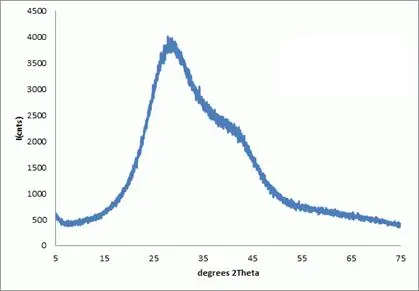
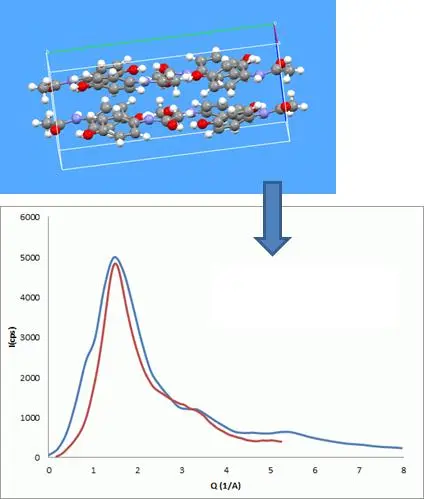
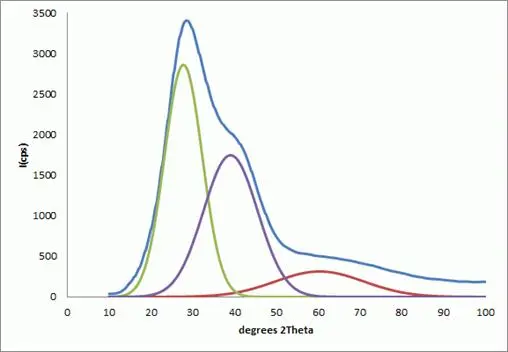
A non-crystalline material produces an essentially continuous XRPD pattern often called an X-ray amorphous pattern. That pattern can still contain information about local molecular order, short-range packing, and structural change.
Triclinic applies X-ray powder diffraction (XRPD), molecular modeling, thermal methods, spectroscopy, microscopy, and stress studies to understand whether a non-crystalline material is stable enough to carry through development and shelf life.
That distinction matters because amorphous materials with similar bulk XRPD appearance may differ in local order, water response, and crystallization tendency. A useful amorphous study therefore compares how the amorphous halo, thermal behavior, spectroscopic signal, and stability response change with production route and stress condition.
ASD and spray-drying development
Triclinic guides amorphous material development by evaluating stability of materials produced by different routes, comparing formulations, and developing assays to determine whether material remains amorphous or contains crystalline components.
Spray drying rapidly evaporates solvent from solution microdroplets, reducing the opportunity for API molecules to reorient and crystallize compared with bulk evaporation. Small-scale spray drying can be evaluated as part of polymorph or amorphous screening when the API has suitable thermal and solvent properties.
ASD question
Development implication
Triclinic evaluation
Is the API a fast or slow crystallizer?
Fast crystallizers may require stronger polymer selection or different processing.
Amorphous generation, stress, and recrystallization testing.
What is the solubility advantage?
ASD only helps if the amorphous state provides a useful performance gain.
Dissolution and supersaturation comparison against crystalline material.
Which polymer and loading are appropriate?
Polymer choice and drug loading control stability, manufacturability, and performance.
Polymer toolbox screen, loading assessment, and stability ranking.
What storage conditions are needed?
Temperature and humidity can drive physical aging or recrystallization.
Tg, DVS, controlled RH/temperature stress, and phase-specific analysis.
Dissolution testing should be paired with residual-solid analysis. Apparent performance can look acceptable while crystallization is occurring in a subset of particles or after polymer dissolution, especially when phase separation is present.
How Triclinic scopes amorphous material and ASD development
An amorphous strategy should start with the performance problem and the failure mode, not with the assumption that every poorly soluble compound belongs in an ASD. Triclinic first separates solubility limitation, dissolution-rate limitation, crystallization tendency, moisture sensitivity, and formulation matrix effects so the study is aimed at the decision the program actually has to make.
The practical output is a control recommendation: whether an amorphous route is justified, which processing and polymer variables deserve testing, which residual-solid analyses are required after dissolution, and which method can detect recrystallization or unintended crystalline content at the relevant development stage.
Define the performance problem. Confirm whether the issue is solubility, dissolution rate, supersaturation maintenance, crystallization during dissolution, or stability during storage.
Generate and stress relevant materials. Compare neat amorphous API, spray-dried dispersions, polymer matrices, humidity and temperature stress, and post-dissolution residual solids where applicable.
Use phase-specific analysis. Combine XRPD with DSC or mDSC, DVS, Raman or LF Raman mapping, microscopy, and stability studies so crystallinity and local order are not inferred from performance data alone.
Translate results into a control path. Recommend polymer, loading, processing, storage, and analytical-monitoring next steps based on recrystallization risk and formulation performance.
Confirm whether amorphous performance is durable or temporary
Amorphous content can raise apparent solubility and dissolution, but it also increases recrystallization and moisture-sensitivity risk. A strong amorphous-material program separates short-term performance from a physical state that can be maintained through processing, storage, and use.
Post-dissolution residual-solid analysis characterizes material recovered during or after dissolution testing. It can determine whether an initially amorphous or supersaturated system subsequently crystallized, converted to another solid form, or remained as a mixed phase. Depending on the material available, the recovered solids may be examined using XRPD, Raman spectroscopy, microscopy, thermal analysis, or another phase-specific technique.
Decision signal
What to test
Actionable output
Apparent solubility gain
The non-crystalline state may temporarily increase supersaturation.
Pair dissolution with residual-solid and stability analysis.
Moisture sensitivity
Water can plasticize amorphous material and accelerate recrystallization.
Use DVS, DSC/Tg, XRPD, Raman/ssNMR, and controlled humidity stress.
ASD feasibility
Polymer choice and drug loading determine whether performance can be maintained.
Rank formulation candidates by stability, dissolution, and phase-specific characterization.
Examples and Publications.
What Most Contract Research Groups Won't Tell You About Solid Form Screening
Authors: Shawn C. Comella and Aeri Park, Ph.D.
Publication date: Q3 2026
Descriptive abstract: This application note explains why experiment count is a weak measure of solid-form screening quality. It presents a risk-based, stage-appropriate framework for polymorphs, hydrates, solvates, salts, cocrystals, and amorphous forms, and connects screening design, thermodynamic ranking, orthogonal characterization, and control strategy to the development decision.
Rapid Development of an Amorphous Solid Dispersion (ASD) - Nifedipine (NIF)
Author: Nico Setiawan, Ph.D., and Cameron Bergman
Publication date: November 2023
Descriptive abstract: The application note presents a nifedipine ASD case study in which multiple ASD-development techniques were compiled to identify candidate dispersions quickly. The work links spray drying, crystallization risk, solubility, stability, and dissolution testing, making it relevant when a poorly soluble API requires an amorphous strategy rather than a purely crystalline form-selection path.
Quantitation of Amorphous Content in Crystalline API via the Relative Heat Capacity at the Glass Transition Temperature
Author: Nico Setiawan, Ph.D., and Liping Meng, Ph.D.
Publication date: December 2025
Descriptive abstract: This application note addresses unintentional amorphization of crystalline API during drying, milling, and wet or dry granulation. It describes using modulated DSC and the relative heat capacity at the glass transition temperature to quantify amorphous content where melt-based crystallinity quantitation was not suitable because the compound decomposed at melting.
Utility of Low Frequency (LF) Raman Mapping: Dissolution of Acetaminophen (ACE) Spray Dried Dispersions (SDD)
Author: Nico Setiawan, Ph.D., Andrew Smith, and David E. Bugay, Ph.D.
Publication date: April 2023
Descriptive abstract: This application note evaluates post-dissolution acetaminophen spray-dried dispersions. It shows why residual-solid analysis matters after dissolution: ACE remained amorphous when intimately mixed, but phase separation allowed crystallization, and LF Raman mapping distinguished polymorphic regions that could be easy to miss by bulk XRPD alone.
Novel Non-Crystalline Materials Analysis: New Strategies to De-risk Amorphous Material Formulation Development
Author: Simon Bates, Ph.D.
Publication date: January 2019
Descriptive abstract: The technical note explains why X-ray amorphous materials should not be treated as structurally featureless. It connects total diffraction analysis, local molecular order, physical stability, density, phase separation, and storage conditions to the practical question of whether an amorphous API or dispersion is likely to recrystallize or remain physically stable.
Application-note examples include mDSC-based quantitation of amorphous content in crystalline API, rapid ASD development using nifedipine, and evaluation of acetaminophen spray-dried dispersions by low-frequency Raman mapping.
These examples highlight the same practical requirement: do not rely on performance data alone. Link dissolution, solubility, Tg, water uptake, and stability behavior to phase-specific solid-state analysis.
Determine whether an API can exist in multiple crystalline forms and whether form differences change solubility, dissolution, stability, manufacturing, drug-product performance, or IP.
Screen ionizable APIs for counterions that improve crystallinity, solubility, dissolution, stability, manufacturability, or developability while controlling disproportionation risk.
Resolve form conversion, failed crystallizations, process sensitivity, stability drift, unexplained PK/dissolution changes, and batch-to-batch material differences.
Continue the solid-form program without returning to the service hub
Use the evidence from this service to select the next development decision. Triclinic can connect form selection, analytical characterization, crystallization and scale-up, and phase-appropriate cGMP support in one program.
Form selection
Compare polymorph, salt, cocrystal, and amorphous options against stability, solubility, manufacturability, and development-stage risk.
An amorphous pharmaceutical solid is a noncrystalline material that lacks the long-range periodic molecular order found in a crystal. Its molecules are immobilized in a disordered arrangement resembling a structurally arrested liquid. Because the amorphous state usually has higher free energy and molecular mobility than the corresponding crystal, it may provide greater apparent solubility and faster dissolution but is generally more susceptible to physical aging, moisture effects, and recrystallization.
When is an amorphous form advantageous?▾
An amorphous form is advantageous when the crystalline API has inadequate solubility or dissolution and the increased free energy of the amorphous state can produce a clinically meaningful performance benefit. It may also be useful when crystallization is difficult, when a formulation must maintain supersaturation, or when an amorphous matrix improves processing. The benefit is worthwhile only if physical and chemical stability, manufacturability, drug loading, and product performance can be controlled throughout the intended shelf life.
Why are amorphous materials metastable?▾
Amorphous materials are metastable because they possess greater free energy than the thermodynamically stable crystalline state. Their disordered molecular arrangement is kinetically trapped rather than at equilibrium. Over time, molecular mobility permits structural relaxation, phase separation, nucleation, and crystal growth. The rate of transformation depends on temperature, moisture, glass transition, molecular structure, impurities, residual crystallinity, formulation composition, and processing history.
How is glass-transition temperature used in amorphous pharmaceutical development?▾
Glass-transition temperature, or Tg, is used as an indicator of molecular mobility, physical stability, processing behavior, and storage risk in amorphous pharmaceutical materials. Below Tg, molecular mobility is comparatively restricted; as temperature approaches or exceeds Tg, mobility increases and crystallization, phase separation, structural relaxation, softening, and chemical degradation may accelerate. Tg is an important development parameter, but it is not an absolute stability threshold and should be interpreted together with moisture content, formulation composition, molecular interactions, thermal history, and direct stability data.
How is recrystallization risk evaluated?▾
Recrystallization risk is evaluated by combining structural, thermal, moisture-sorption, mobility, and stability studies under conditions relevant to manufacture, storage, and use. Important factors include glass-transition temperature, molecular mobility, water and residual-solvent plasticization, residual crystal seeds, API–polymer miscibility, drug loading, phase separation, processing stress, and crystallization kinetics. No single accelerated test can establish long-term stability; risk should be assessed through orthogonal methods and mechanistically relevant challenge conditions.
What role does moisture play in the stability of amorphous pharmaceutical materials?▾
Moisture is one of the most important determinants of amorphous-material stability. Water commonly acts as a plasticizer, lowering glass-transition temperature, increasing molecular mobility, and accelerating physical aging, phase separation, recrystallization, agglomeration, and some chemical-degradation pathways. Moisture may also alter API–polymer interactions, create hydrates, change dissolution performance, or cause irreversible structural transformation. Stability must therefore be evaluated as a function of water activity, moisture content, exposure time, temperature, formulation composition, and packaging.
How are amorphous solid dispersions characterized?▾
Amorphous solid dispersions are characterized using orthogonal techniques that evaluate crystallinity, glass transition, phase homogeneity, API–polymer interactions, composition, moisture response, chemical stability, particle properties, and dissolution performance. XRPD and modulated DSC are foundational, but they cannot independently establish molecular-level miscibility, absence of low-level crystallinity, or long-term stability. A meaningful characterization strategy links physical state and composition to manufacturing history, storage behavior, and product performance.
What are common failure mechanisms in amorphous pharmaceutical development?▾
Common failure mechanisms include recrystallization, moisture plasticization, amorphous–amorphous phase separation, physical aging, chemical degradation, inadequate drug–polymer miscibility, residual crystallinity, excessive drug loading, process-induced transformation, poor supersaturation maintenance, and inadequate packaging. Programs also fail when absence of XRPD peaks is treated as proof of stability or when a formulation is optimized for dissolution without considering manufacturability and shelf life.
Talk to a Triclinic Labs scientist about Amorphous Material and Amorphous Solid Dispersion (ASD) Development
Send the material history, current data package, process conditions, development objective, and timeline. Triclinic will route the request to the right solid-form scientist. For a connected program from candidate nomination through IND, explore the candidate-to-IND solid-form development pathway.