
Paragraph IV ANDA Expert Support
Scientific work plans, comparative testing, and expert-witness support for ANDA and Hatch-Waxman technical issues.

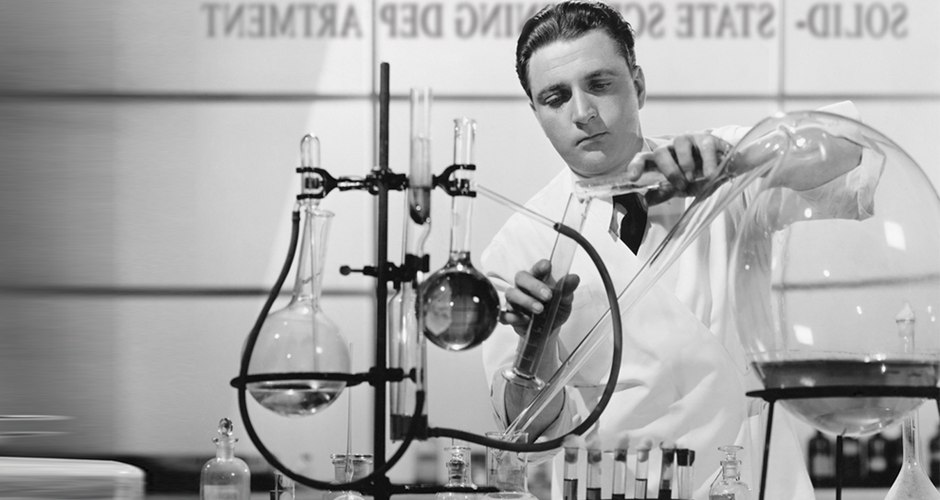
Prior art is not always self-executing. Solvent choice, temperature history, mixing, isolation, drying, humidity, scale, seed material, milling, and analytical conditions can determine whether a procedure produces a claimed form, a mixture, an amorphous material, a hydrate, a solvate, or a different material altogether.
Triclinic reproduces prior-art procedures under controlled conditions and characterizes the resulting materials using appropriate analytical methods. The work is designed to answer what the procedure produces, under what assumptions, and how confidently that result can be interpreted.
The result is a technical record that can support counsel, experts, CMC teams, and scientific decision makers without converting scientific observations into legal conclusions.
The workflow begins with a close reading of the procedure and a technical assessment of variables that may affect the product. Ambiguities are identified before laboratory work begins so the experimental design can be controlled rather than improvised.
Triclinic then executes the procedure under agreed conditions, records material handling and observations, and characterizes the output using methods appropriate to the question. Where needed, reasonable procedural variations can be tested to determine whether a result is robust or condition-dependent.
The report focuses on what was done, what was produced, how the material was characterized, and what limitations affect interpretation.
A prior-art example may appear straightforward until it is tested. Small changes in crystallization, solvent removal, storage, or analytical preparation can change form, hydration state, crystallinity, impurity profile, or morphology.
A useful reproduction study therefore does more than repeat a recipe. It identifies critical assumptions, documents execution, and characterizes the material well enough to support the technical question.
DrugPatentWatch’s discussion of pharmaceutical patent longevity highlights the strategic role of secondary patents, including polymorph, formulation, method-of-use, and manufacturing-process claims. Prior-art reproduction can be central to those disputes because the legal and business questions often depend on a narrower scientific question: what does the earlier disclosure actually produce under controlled, documented conditions?
Triclinic helps test that factual predicate. The work can evaluate whether a procedure inherently produces a claimed form, produces a mixture, requires unstated conditions, fails to reproduce, or produces different materials depending on reasonable experimental choices.
Review DrugPatentWatch’s overview of pharmaceutical patent longevity
Scientific work plans, comparative testing, and expert-witness support for ANDA and Hatch-Waxman technical issues.
Assessment of whether solid-form claims are supported by reproducible, distinguishable analytical evidence.
Fact-witness and expert-witness support for chemistry, materials, and solid-state disputes.
Screening, selection, characterization, and control of polymorphs, salts, cocrystals, hydrates, solvates, and amorphous materials.
Crystal, molecular, impurity, and structure-determination support when structural proof is central to the question.
Sometimes, but many procedures leave room for interpretation. Triclinic identifies those variables and scopes the work so assumptions are documented before execution.
Ambiguities can be addressed through a documented technical plan. The plan may test one agreed interpretation or several reasonable variations, depending on the question and available material.
Methods depend on the expected material and dispute. XRPD, DSC, TGA, Raman, FTIR, NMR, chromatography, microscopy, DVS, Karl Fischer, SCXRD, and MicroED may be used where appropriate.
Yes. Reproduction work can generate scientific evidence for counsel and experts. Triclinic provides data and technical interpretation, not legal conclusions.
Provide the patent, publication, procedure, target material, available samples, prior data, analytical expectations, timeline, and the decision the reproduction study must support.
Undocumented variables should be identified before execution and addressed through an agreed technical rationale, documented assumptions, sensitivity experiments, or multiple reasonable interpretations when the issue could materially affect the result.

Send the procedure, claim or technical question, available samples, known analytical data, and the timeline. Triclinic can help determine whether the work should be a direct reproduction, a controlled variation study, or a broader characterization program.

 Common questions