What is this?
cGMP morphology testing uses optical microscopy, polarized-light microscopy, particle imaging, and related methods to describe particle shape, agglomeration, birefringence, defects, contamination, and visible heterogeneity.

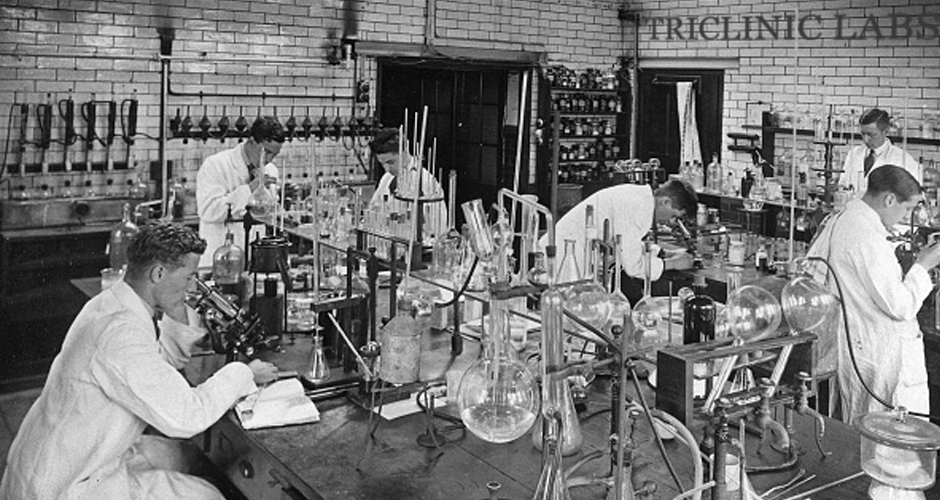
Microscopic particle characteristics can explain manufacturing behavior that bulk measurements miss. Crystal habit, agglomeration, surface texture, birefringence, foreign particulates, and morphology may affect blending, flow, dissolution, filtration, and product appearance. Triclinic Labs performs cGMP optical microscopy, polarized light microscopy (PLM), and morphological characterization using controlled procedures, qualified instrumentation, traceable image capture, and complete regulated documentation.
Our scientists connect observations to representative particle populations and complementary analytical evidence so that images support a defensible identification or root-cause conclusion.
The content of this page has been scientifically reviewed by Nico Setiawan, Ph.D., Analytical Director at Triclinic Labs · Updated 8/1/2026


cGMP morphology testing uses optical microscopy, polarized-light microscopy, particle imaging, and related methods to describe particle shape, agglomeration, birefringence, defects, contamination, and visible heterogeneity.
Use it for raw-material ID, particle shape, visible particles, talc/asbestos support, batch investigations, morphology specifications, or when particle attributes affect flow, dissolution, filtration, or product appearance.
Microscopy can be subjective without clear criteria, trained analysts, reference materials, representative sampling, image documentation, and orthogonal chemistry or form evidence.
Small amounts can support triage, but cGMP methods need enough material for representative subsampling, replicates, analyst precision, standards, and retain needs.
Complementary techniques include particle-size analysis, X-ray powder diffraction (XRPD), Raman and Fourier-transform infrared (FTIR) spectroscopy, scanning electron microscopy with energy-dispersive X-ray spectroscopy (SEM/EDX), polarized-light microscopy (PLM), thermal analysis, and chemical assays. They connect particle shape and visible features to size, composition, solid form, and performance.
FDA cares that the method is scientifically justified, specific for the intended attribute in the real matrix, controlled under the quality system, validated or verified where appropriate, data-integrity compliant, and lifecycle managed.
Common mistakes include using exploratory data as release evidence, validating the wrong matrix, ignoring sample preparation, under-documenting controls, relying on one technique when orthogonal evidence is needed, or failing to define the decision before testing.
Triclinic uses cGMP morphology work when particle shape, size, surface features, crystal habit, agglomeration, or foreign matter must be documented under quality-controlled conditions. Real-world applications include release or stability support, lot comparability, manufacturing investigations, contaminant characterization, and controlled image-based evidence that helps connect visual material differences to quality or performance risk.
Exploratory data can help choose a method, but release or filing-support data require controlled execution. The method must be suitable for the matrix, the quality attribute must be defined, reference standards and controls must be appropriate, and the report or CoA must say only what the data support.
| cGMP concern | Why it matters | Practical control |
|---|---|---|
| Method status | Exploratory, verified compendial, validated custom, and transferred methods have different evidence requirements. | Define status before testing and document any development, verification, validation, or transfer work. |
| Sample matrix | Specificity can fail in real drug product, excipient, talc, low-dose, or complex solid mixtures. | Use representative material, placebo/matrix controls, spike studies, or orthogonal methods where needed. |
| Data integrity | Release or stability results must survive QA review, audit, and regulatory scrutiny. | Use controlled records, system suitability, analyst review, deviations/OOS process, and traceable calculations. |
The table below lists the specific platforms, brands, models, software, detectors, and capability notes relevant to this cGMP service area.
| Instrument or platform | Brand, model, software, or detector | Additional capabilities and use |
|---|---|---|
| Stereo / compound / polarized-light microscopy | Leica M80 stereo microscope; Leica DM2500P compound microscope; polarizing-light microscope; PAX-it! 2 version 1.9.5 software | Still and dynamic image capture, birefringence, morphology, particle habit, density/color/shape, and optical-path boundary observations. |
| Digital microscopy and topography | Keyence VHX-2000E digital microscope | Still imaging, topography image capture, surface inspection, particle documentation, and visual root-cause support. |
| SEM/EDX | Thermo Scientific Phenom XL with fully integrated energy-dispersive X-ray spectroscopy (EDX), secondary-electron (SE), and backscattered-electron (BSE) detection | High-vacuum/low-vacuum SEM imaging, BSE contrast, and integrated elemental analysis for particles and contaminants. |
| Field-emission SEM | FEI Quanta 3D FEG with high-vacuum, low-vacuum, and cryo capability | High-resolution morphology, surface/ultrastructure examination, and cryogenic or low-vacuum imaging workflows. |
| Hot-stage microscopy | Linkam LTS420, ambient to 600 °C | Thermomicroscopy, phase-change observation, melting/recrystallization behavior, and cocrystal/solid-form screening support. |
| Atomic-force microscopy | Hitachi and Park AFM systems, all modes | Nanometer-scale topography and surface-property measurements for small particles and surfaces. |
This example uses microscopy as a regulated triage tool rather than a stand-alone conclusion. cGMP morphology work may rely on optical microscopy, polarized-light microscopy, Raman microscopy, infrared imaging, SEM/EDX, hot-stage microscopy, and AFM, but the image or particle description still needs to be tied to a specific method purpose, sampling plan, preparation procedure, and, where needed, orthogonal chemical or solid-form evidence.
| Morphology observation | cGMP decision supported |
|---|---|
| Particle size, shape, and agglomeration | Investigate milling, blending, filtration, flow, dissolution, or lot-comparability concerns. |
| Birefringence and anisotropy | Support crystalline versus isotropic material triage and guide follow-up XRPD, Raman/FTIR, or PLM decisions. |
| Visible foreign particulates or inclusions | Prioritize Raman/FTIR, SEM/EDX, XRPD, or chromatography for identity confirmation. |
| Crystal habit, surface texture, or optical behavior | Connect process history, morphology specifications, and potential performance failures to observable evidence. |
These examples cite Triclinic source documents, regulatory guidances, or literature relevant to this cGMP service. Download buttons are positioned at the bottom-left of each example.
Author: International Council for Harmonisation / FDA
Publication date: 2024
Abstract: These harmonized guidances describe validation and development principles for analytical procedures used to assess drug-substance and drug-product quality. They anchor expectations for specificity, accuracy, precision, range, robustness, lifecycle management, and fit-for-purpose method evidence in cGMP work.
Use cGMP NMR for identity, purity, qNMR, reference-material verification, method development, validation, and release testing.
View serviceUse cGMP XRPD for solid-form identification, polymorph or phase quantitation, crystallinity, method validation, release, and stability support.
View serviceDevelop, validate, verify, and transfer wet or dry particle-size methods for release specifications and quality decisions.
View serviceUse cGMP DSC and TGA to evaluate melting, desolvation, dehydration, glass transitions, degradation, and thermal material control.
View serviceUse cGMP Raman and FTIR for raw-material ID, solid-form differentiation, mapping, contaminant ID, and validated spectroscopic methods.
View serviceUse verified or validated methods to support batch disposition, CoA issuance, stability testing, and regulatory documentation.
View serviceRun the work under cGMP when the result will support release, stability, regulatory documentation, method validation or transfer, CoA issuance, or a quality investigation rather than exploratory screening only.
Material requirements depend on method, matrix, replicate design, standards, destructive testing, retain needs, and whether method development, validation, transfer, or release testing is required. Confirm exact amounts before shipment.
Yes. The project should be scoped from the quality attribute, sample matrix, method status, and regulatory decision before selecting a technique or validation plan.
Defensible cGMP results require appropriate method status, sample traceability, reference standards, controls, system suitability, analyst training, data review, and clear reporting of limitations.
Yes. Triclinic develops, validates, and transfers morphology and microscopy methods when particle shape, habit, birefringence, agglomeration, visible contamination, or microscopic attributes must support a regulated decision. Method work can define sample preparation, magnification, illumination, analyst controls, counting or classification criteria, image documentation, orthogonal confirmation, precision, robustness, and transfer expectations.
The method should define sample preparation, magnification, illumination, fields or particles examined, image-capture controls, measurable attributes, analyst rules, acceptance criteria, reference images or standards, and data-review expectations.

Send the sample type, intended use of the data, method or monograph if available, specification, matrix, timeline, and whether the work is exploratory, cGMP, validation, transfer, stability, release, or investigation support.