
Pharmaceutical Impurity & Degradant Identification
Identify an unexpected chromatographic peak when packaging, formulation, degradation, or process chemistry may be involved.

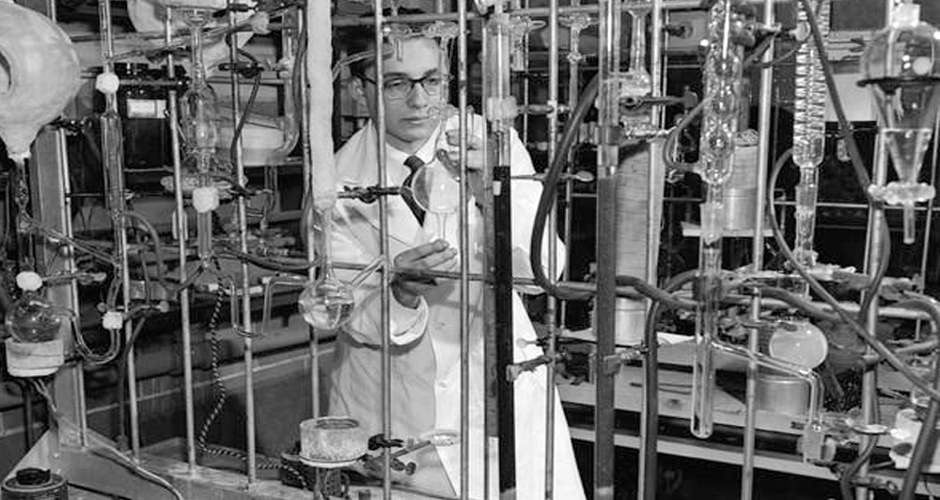
Extractables and leachables work is most useful when the test plan reflects the actual contact material, route of exposure, product matrix, storage condition, processing contact, and decision risk. Triclinic supports E&L-related investigations where targeted chemistry, contaminant identification, packaging comparison, surface residue analysis, polymer identification, or impurity follow-up is needed to understand a suspected source.
A single test cannot resolve every E&L program. Good E&L support may require controlled extraction design, method selection, reference materials, mass-spectral interpretation, polymer and additive knowledge, and follow-up confirmation or quantitation.
Extractables and leachables support often turns on source attribution: whether a signal, residue, odor, film, discoloration, particle, or unexpected peak is consistent with packaging, label adhesive, ink, cap liner, induction seal, filter, tubing, gasket, cleaning residue, or another contact material. Comparative analysis is therefore as important as detection.
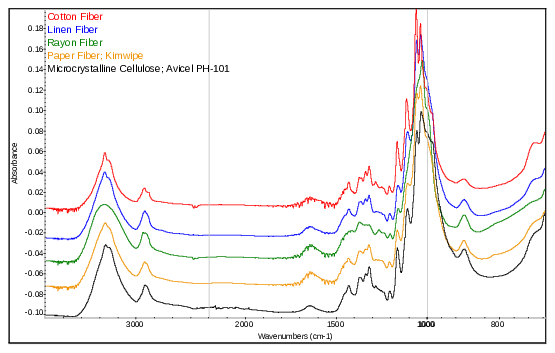
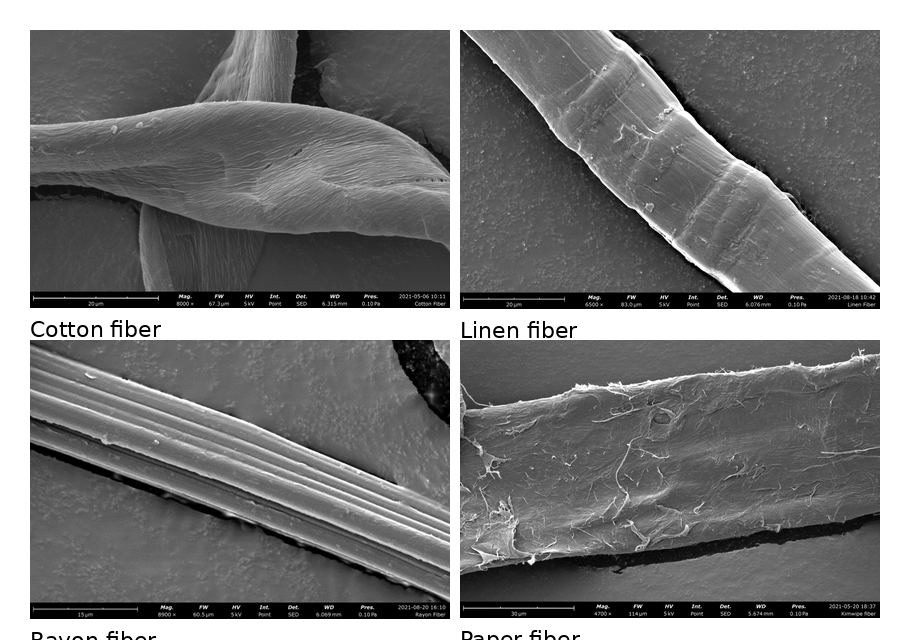
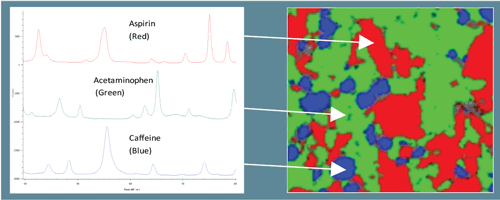
The counterfeit-identification and cellulosic-fiber examples provide useful E&L analogs. FTIR/NIR and Raman can compare polymers, adhesives, labels, seals, residues, and dosage-form components. SEM/EDX can localize inorganic fillers, pigments, metals, or mineral material. IR plus SEM can distinguish cellulosic fibers that might otherwise look chemically similar and tie a finding to a wipe, paper, packaging, or filter-source hypothesis.
| Technique or platform | Information produced | Why it matters |
|---|---|---|
| Optical and digital microscopy | Visual morphology, dimensions, surface features, color, layering, and sample-selection context. | Documents the evidence before destructive testing and helps select specific particles or regions for analysis. |
| Raman microscopy and chemical mapping | Molecular fingerprints and spatial distribution of many APIs, excipients, pigments, polymers, and crystalline components. | Useful for suspect-versus-authentic comparisons, coating/core analysis, layered systems, and localized unknowns. |
| FTIR and IR microspectroscopy | Polymer, organic, excipient, adhesive, fiber, film, and residue identification. | Often strong for particles, fibers, packaging materials, cap liners, label adhesives, and contact-material comparisons. |
| SEM/EDX | High-resolution morphology plus elemental composition and elemental maps. | Critical for inorganic particles, fillers, talc-related signals, metals, corrosion, pigments, and source comparisons. |
| LC/MS, GC/MS, chromatography, NMR, or ICP-MS | Targeted or investigative molecular, volatile/semi-volatile, structural, or trace-element information. | Added when direct microanalysis is not enough or when confirmation, quantitation, or structural assignment is required. |
Identify an unexpected chromatographic peak when packaging, formulation, degradation, or process chemistry may be involved.
Characterize solid residues, films, particles, fibers, and deposits associated with contact materials or packaging components.
Control blanks, preparation artifacts, and matrix interference when a suspected extractable or leachable is present at low abundance.
Test whether the evidence is consistent with a closure, device component, process-contact surface, adhesive, ink, polymer, or other proposed source.
Yes. A focused investigation can compare an unknown signal or material with packaging, device, closure, process-contact, or formulation components. The scope should clearly distinguish a source investigation from a comprehensive extractables and leachables qualification program.
Unused packaging and device components, aged or stressed components, authentic product, blanks, controls, process-contact materials, adhesives, inks, elastomers, polymers, and prior extractables data can help test a proposed source.
Provide the affected product or extract, unaffected comparison lots, relevant blanks, contact materials, packaging components, storage and exposure conditions, timing, prior chromatographic or spectral data, and the decision the investigation must support.
Define the product-contact system, materials of construction, extraction or storage conditions, analytical target, reporting threshold, toxicological or quality question, and whether the need is screening, identification, quantification, source comparison, or a regulated study component.

Share the affected product or extract, packaging or device components, materials of construction, storage and exposure conditions, blanks and controls, prior chromatographic data, and whether the need is screening, identification, quantification, or source comparison.