
Unknown Contaminant Identification
Identify particles, residues, fibers, films, deposits, and other unknown materials using orthogonal analytical evidence.

Impurity work may involve an unknown chromatographic peak, a degradant, a residual process material, a leachable, a contaminant particle, an excipient-related signal, or a component localized within a formulation. Triclinic scopes the work to determine whether the need is material-class assignment, tentative structural proposal, confirmatory identification, comparative fingerprinting, or method-ready impurity control.
No single technique is universally sufficient. LC/MS and GC/MS may be appropriate for soluble organic impurities; NMR can support structural elucidation when enough material is available; Raman and FTIR can identify solids, coatings, excipients, and particles; SEM/EDX can define inorganic or elemental contributions; and reference comparisons can anchor assignments.
Impurity identification often requires a defensible chain of evidence rather than a single spectral match. When an unknown is a particle, fiber, film, residue, localized domain, or mixed material, Triclinic uses the form of the evidence to choose the workflow: microscopy for context, IR or Raman for molecular class, SEM/EDX for elemental composition and localization, and chemometric approaches when pattern-rich data or mixed components need interpretation.
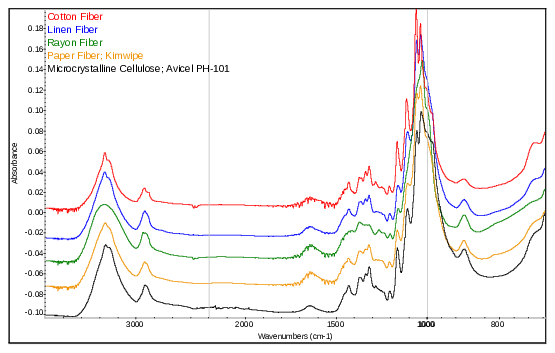
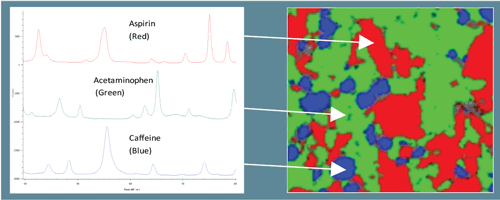
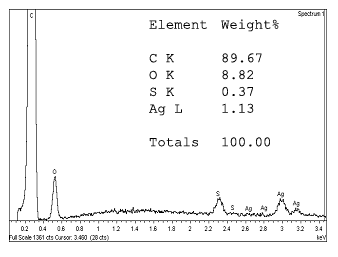
The uploaded fiber-identification and counterfeit-analysis examples show the same principle from different directions. Cellulosic fibers required IR plus SEM to distinguish chemically similar materials. Raman chemical imaging assigned component-specific spectra and mapped spatial distribution in a multi-component drug product. SEM/EDX then provided elemental evidence for composition and localization.
| Technique or platform | Information produced | Why it matters |
|---|---|---|
| Optical and digital microscopy | Visual morphology, dimensions, surface features, color, layering, and sample-selection context. | Documents the evidence before destructive testing and helps select specific particles or regions for analysis. |
| Raman microscopy and chemical mapping | Molecular fingerprints and spatial distribution of many APIs, excipients, pigments, polymers, and crystalline components. | Useful for suspect-versus-authentic comparisons, coating/core analysis, layered systems, and localized unknowns. |
| FTIR and IR microspectroscopy | Polymer, organic, excipient, adhesive, fiber, film, and residue identification. | Often strong for particles, fibers, packaging materials, cap liners, label adhesives, and contact-material comparisons. |
| SEM/EDX | High-resolution morphology plus elemental composition and elemental maps. | Critical for inorganic particles, fillers, talc-related signals, metals, corrosion, pigments, and source comparisons. |
| LC/MS, GC/MS, chromatography, NMR, or ICP-MS | Targeted or investigative molecular, volatile/semi-volatile, structural, or trace-element information. | Added when direct microanalysis is not enough or when confirmation, quantitation, or structural assignment is required. |
Identify particles, residues, fibers, films, deposits, and other unknown materials using orthogonal analytical evidence.
Compare good and suspect lots, process materials, packaging, and suspected sources to support deviation and CAPA decisions.
Use sensitive and spatially resolved workflows for low-level components, particles, residues, and elemental signals.
Compare suspect products, packaging, labels, seals, and dosage forms against authentic references.
Yes. Comparisons to retained lots, authentic lots, raw materials, packaging, process-contact materials, filters, cleaning agents, environmental samples, or supplier materials often make the interpretation stronger.
Yes, when the samples, chain of custody, controls, and comparison materials are appropriate for the decision. The report should separate confirmed findings from plausible but unconfirmed source hypotheses.
Very small or mixed materials may require microscopy-guided sampling, multiple techniques, and careful language. Some results can be definitive; others are best reported as material class, component assignment, or evidence-consistent source comparison.
Isolation or enrichment may be needed when the impurity is low-level, coelutes, produces overlapping spectra, or cannot be assigned confidently from mixture data. Preparative chromatography, trapping, fraction collection, or selective extraction may be appropriate.

Send the material, current data, project objective, quality requirements, suspected sources, available comparison materials, and timeline. Triclinic will route the request to the right scientific or operational contact.