Resolve crystal structures when suitable single crystals can be grown, isolated, or supplied.
Resolve crystal structures when suitable single crystals can be grown, isolated, or supplied.
We use this technique for atomic-level crystal structure determination, absolute configuration, molecular packing, and crystallographic confirmation when suitable crystals are available.
Triclinic Labs provides scientist-led single-crystal X-ray diffraction services for small-molecule structure determination, connectivity, stereochemistry, absolute configuration, and crystal-packing questions.
The content of this page has been scientifically reviewed by Steef Boerrigter, Ph.D., Research Fellow & Head Crystallographer at Triclinic Labs · Updated 8/1/2026
SCXRD remains the structural gold standard when the sample allows it
SCXRD is a method for determining the arrangement of atoms within a crystal, including mean atomic positions, chemical bonds, disorder, and additional crystallographic information.
SCXRD is appropriate when a diffraction-quality single crystal is available or can be grown. We offer both services. It can support molecular structure, absolute configuration, stoichiometry, hydrogen-bonding interpretation, and patent or regulatory examples when the experimental record is well documented.
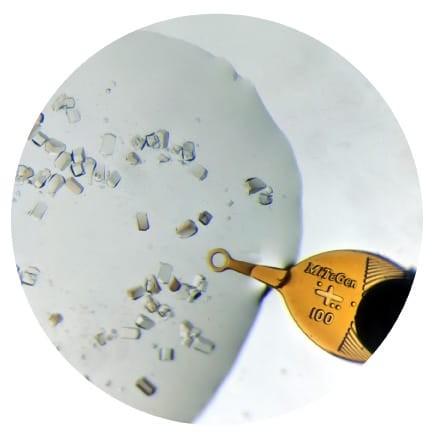
Figure 1.A loop/mounting tool for retrieving and mounting small molecule/inorganic crystals suitable for SCXRD.
Reference: https://www.mitegen.com/product/loops/
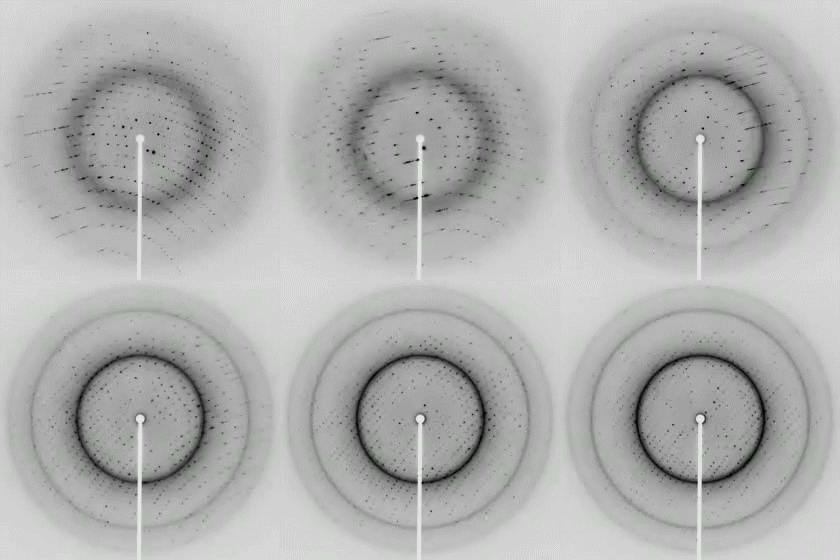
Figure 2: Typical diffraction patterns being collected on a SCXRD instrument. The crystal mounting point is at the center of the image, hidden by the shadow of the beam stop. A set of consecutive diffraction images was obtained with an area detector while the sample was cooled to 100 K. Over time, two concentric dark circles appear because of ice buildup near the sample. Reference:https://www.xtal.iqf.csic.es/Cristalografia/parte_06-en.html
When you can't achieve diffraction quality single crystals: Use SCXRD and Micro Electron Diffraction (MicroED) as complementary tools
The right strategy is not SCXRD versus MicroED; it is the method that fits the material. SCXRD is preferred when high-quality single crystals are available. MicroED is a strong alternative when the material exists only as microcrystalline powder, a low-level impurity, or a form that resists large-crystal growth.
In either case, final interpretation should include phase purity, sample history, and orthogonal evidence so that the structure is connected to the development question.
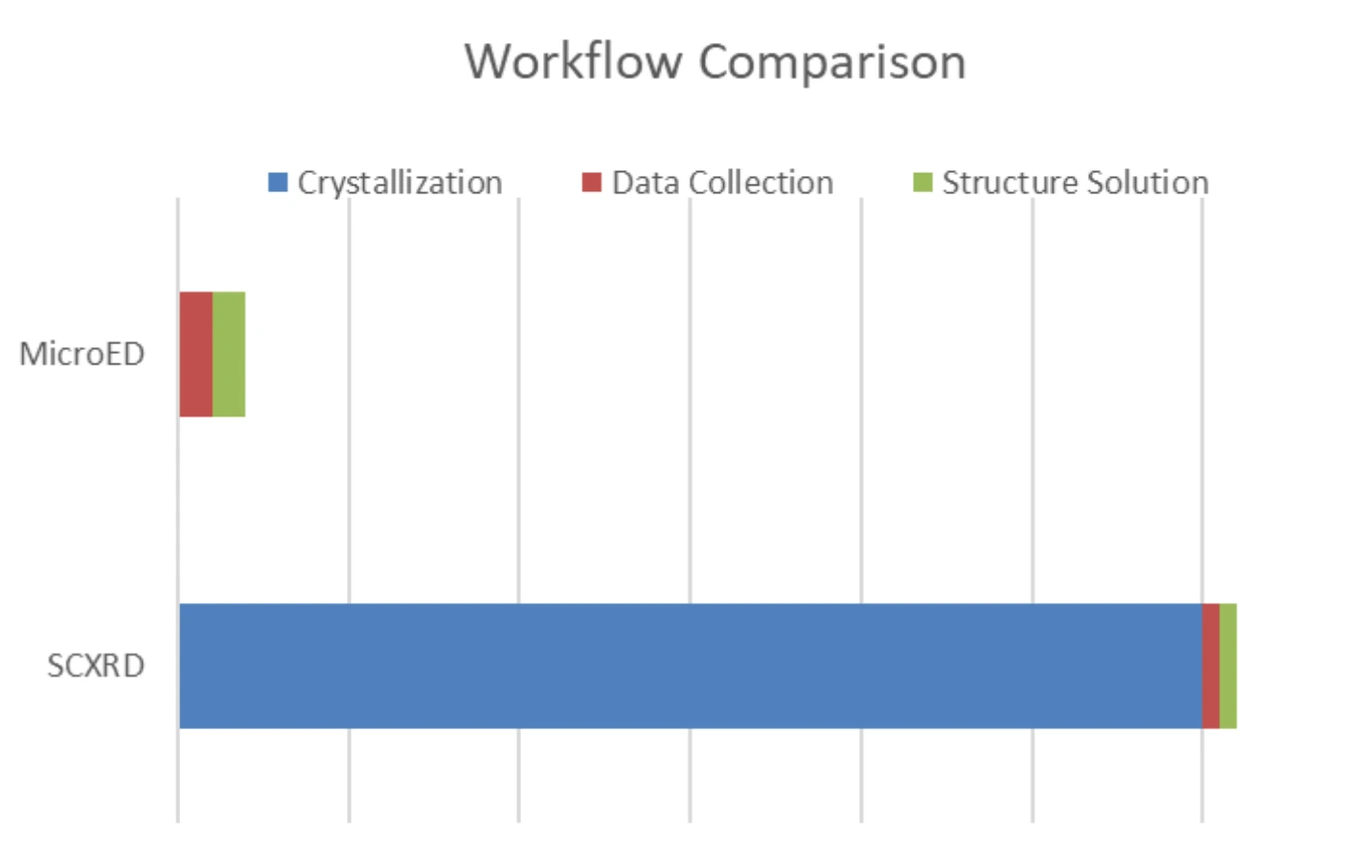
SCXRD versus MicroED workflow comparison
A stepwise comparison shows that the SCXRD timeline is dominated by crystallization and optimization, while MicroED can move directly from a microcrystalline sample to structure solution. MicroED does not replace SCXRD; it removes the large-single-crystal bottleneck when the available material is a powder, trace impurity, or otherwise unsuitable for conventional SCXRD. Source: Comella, George, and Boerrigter, Integrating Microcrystal Electron Diffraction as a Mainstream Work Tool in Solid Form Development and Structure Elucidation, Triclinic Labs white paper, Q2 2026.
How the evidence fits together using orthogonal techniques
Question
Useful evidence
Decision output
Molecular identity or formula
LC–MS, HRMS, MS fragments, NMR, elemental or isotope information where relevant.
Candidate formula and structure assignment with alternatives and limitations.
Crystal structure or absolute configuration
SCXRD, MicroED, crystallographic refinement, and chemistry context.
Structure solution, unit-cell or form confirmation, stereochemical interpretation when supported.
Impurity or contaminant identity
Chromatography, HRMS, MicroED if crystalline, NMR if sufficient material, Raman and IR, microscopy.
Root-cause-ready identity conclusion and evidence package.
Solid-form or formulation ambiguity
XRPD, Raman and IR, ssNMR, DSC and TGA, microscopy, DVS, residual-solids analysis.
Phase/form assignment and control or follow-up recommendation.
Examples and Publications.
These source-backed examples include author, publication date, and an abstract-level explanation.
Integrating Microcrystal Electron Diffraction as a Mainstream Work Tool in Solid Form Development and Structure Elucidation
Author: Shawn C. Comella, Gary C. George III, and Steef X.M. Boerrigter
Publication date: Q2 2026
Abstract: MicroED removes the large-single-crystal bottleneck by enabling molecular structure determination directly from sub-micron crystals. Integrated with expert crystallography, XRPD, HRMS, Raman and IR, and other orthogonal methods, it functions as a mainstream structure-elucidation workflow.
Microcrystal Electron Diffraction Study of Multi-component Salt and Cocrystal Forms of 3-Nitro-benzoic Acid and Pyrimethanil
Author: Stephan X.M. Boerrigter, G. Patrick Stahly, Matthias Zeller, and Christian Jandl
Publication date: Q4 2024
Abstract: One salt and two cocrystal forms in a 3-nitrobenzoic acid/pyrimethanil system were characterized by comparing SCXRD and MicroED structure results. The example is relevant to salt/cocrystal classification, proton-position questions, and the ability of MicroED to solve a new polymorph from a single impurity particle.
Abstract: This pharmaceutical-materials example demonstrates how mechanochemistry and MicroED can be combined when suitable single crystals are difficult to obtain. It supports using MicroED as a practical structure-elucidation tool for pharmaceutical salts and solid forms.
Frequently Asked Questions about Single-Crystal X-ray Diffraction
When is single-crystal X-ray diffraction the right structure method?
SCXRD is the right starting point when a diffraction-quality single crystal is available or can reasonably be grown, isolated, and mounted. It is especially useful when the decision requires an atomic-level crystal structure, absolute-configuration support, molecular packing information, or a crystallographic confirmation of a proposed structure.
What makes a crystal suitable for SCXRD?
A suitable crystal is generally a single, well-formed crystal with adequate size, low twinning or disorder, sufficient diffraction strength, and stability under the mounting and data-collection conditions. Very small, highly defective, poorly diffracting, or mixed crystalline material may require MicroED or another orthogonal approach.
What information should I provide before sending material for SCXRD?
Provide the compound identity or suspected identity, sample history, solvent and crystallization history, available amount, expected salts or solvates, prior XRPD or microscopy images, handling sensitivities, and the decision the structure must support.
Can Triclinic grow crystals suitable for SCXRD analysis?
Yes. Triclinic can evaluate crystallization options and attempt to grow or isolate crystals suitable for SCXRD analysis when the material, quantity, purity, solubility, stability, and timeline support that work. Crystal-growth efforts may include solvent screening, slow evaporation, cooling, vapor diffusion, slurry conversion, seeding, or other small-molecule crystallization approaches. Suitability is not guaranteed because some materials form powders, oils, twinned crystals, highly disordered crystals, unstable solvates, or crystals that diffract poorly, but early crystallization assessment helps determine whether SCXRD, MicroED, or another orthogonal structure method is the best path.
When should MicroED be considered instead of SCXRD?
MicroED should be considered when the material is microcrystalline, available only as powder or particles, present at very low level, or repeatedly fails to produce crystals large enough for conventional SCXRD. SCXRD and MicroED are complementary structure tools, and the best choice depends on the physical form of the available material.
What happens if suitable single crystals cannot be grown?▾
Crystal-growth conditions can be expanded, or MicroED may be considered when microcrystalline particles are available. XRPD, NMR, spectroscopy, thermal analysis, and computational methods may also provide complementary structural evidence.
Discuss single-crystal X-ray diffraction
Share crystal availability, sample history, target structure question, prior analytical data, timeline, and whether the work supports CMC, IP, or regulatory decisions.