

Unknown Contaminant Identification
Identify a particle, residue, film, fiber, deposit, or mixed material before testing source hypotheses.

Process-contamination and material-failure investigations start with the production problem: what changed, where it occurred, which samples represent the expected condition, and which decisions the analytical evidence must support. Triclinic designs the work around the failure mode instead of applying a fixed list of tests.
Projects may involve discolored dip or wash tanks, unexpected residues, deposits, process-fluid changes, suspect raw materials, equipment-contact materials, failed batches, or differences between a collected sample and the expected virgin material. Orthogonal methods help distinguish composition, physical form, and source consistency without overstating what the evidence proves.
Source investigations are strongest when the suspect sample is tested alongside realistic references. Those may include virgin process material, an acceptable tank or lot, cleaning agents, hoses, seals, filters, corrosion products, wipes, packaging, and environmental materials.
Microscopy and spectroscopy can identify an unknown material class, while elemental mapping, diffraction, chromatography, or mass spectrometry can add evidence needed to compare a sample with a suspected source. The result may confirm a match, exclude a candidate, or define the remaining uncertainty.
| Technique or platform | Information produced | Why it matters |
|---|---|---|
| Optical and digital microscopy | Visual morphology, dimensions, surface features, color, layering, and sample-selection context. | Documents the evidence before destructive testing and helps select specific particles or regions for analysis. |
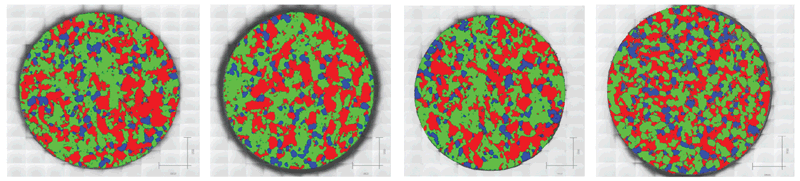
| Raman microscopy and chemical mapping | Molecular fingerprints and spatial distribution of many APIs, excipients, pigments, polymers, and crystalline components. | Useful for suspect-versus-authentic comparisons, coating/core analysis, layered systems, and localized unknowns. |
| FTIR and IR microspectroscopy | Polymer, organic, excipient, adhesive, fiber, film, and residue identification. | Often strong for particles, fibers, packaging materials, cap liners, label adhesives, and contact-material comparisons. |
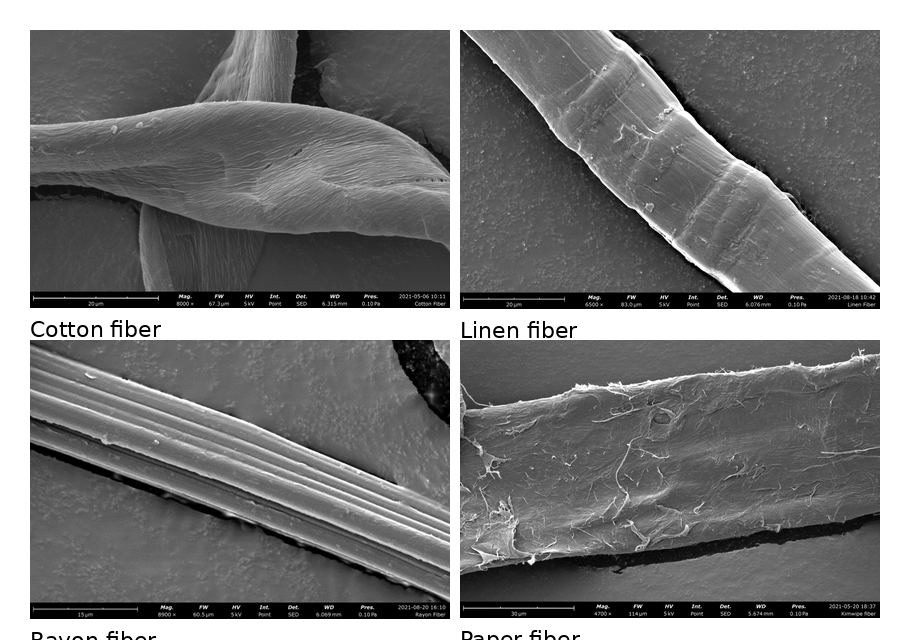
| SEM/EDX | High-resolution morphology plus elemental composition and elemental maps. | Critical for inorganic particles, fillers, talc-related signals, metals, corrosion, pigments, and source comparisons. |
| LC/MS, GC/MS, chromatography, NMR, or ICP-MS | Targeted or investigative molecular, volatile/semi-volatile, structural, or trace-element information. | Added when direct microanalysis is not enough or when confirmation, quantitation, or structural assignment is required. |
Identify a particle, residue, film, fiber, deposit, or mixed material before testing source hypotheses.
Investigate pharmaceutical deviations, out-of-specification results, batch failures, and product-quality questions.
Compare elemental evidence with raw materials, equipment, corrosion products, catalysts, and environmental sources.
Design sampling, blank, and sensitivity controls when a suspected contaminant is sparse or matrix-interfered.
Yes. Suspect samples can be compared with virgin material, acceptable lots, make-up solutions, cleaning agents, contact materials, and other realistic source candidates. The plan is selected for the sample matrix and the decision the comparison must support.
Yes. Provide representative tank samples, expected or virgin material, cleaning and process history, and suspected sources. Microscopy, spectroscopy, elemental analysis, diffraction, chromatography, and mass spectrometry may be combined as appropriate.
Provide failed and acceptable samples, virgin or target material, photographs, sampling locations, process and cleaning history, equipment-contact materials, prior data, and realistic source candidates whenever available.
The report states what the evidence confirms, supports, excludes, or leaves unresolved. A source is not labeled as the root cause unless the analytical evidence and available process context support that conclusion.

Share the process problem, sampling locations, suspect and acceptable materials, virgin or reference samples, photographs, prior data, timing, and the source hypotheses the investigation must test.