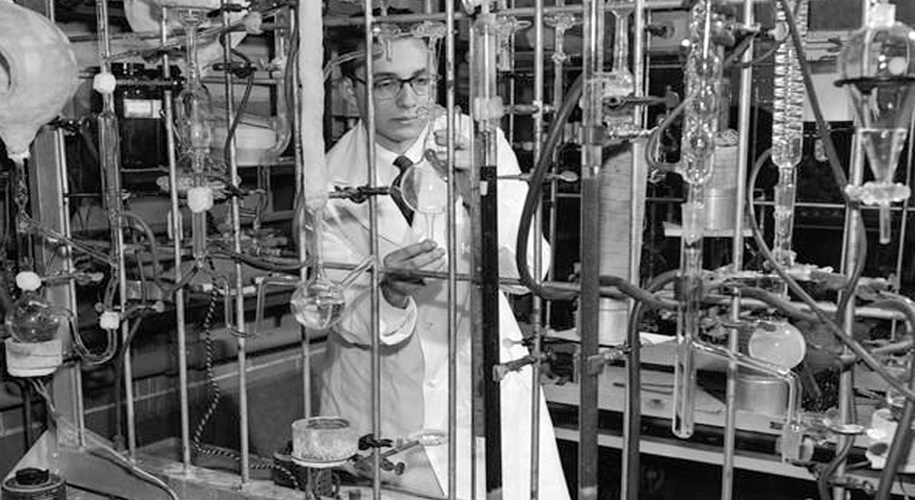
Separating components in complex mixtures
Chromatography remains one of the most widely used techniques in pharmaceutical analysis for resolving individual analytes from multicomponent samples. Chromatographic data can appear precise yet still lead to incorrect conclusions when coelution, matrix interference, incomplete extraction recovery, analyte instability, or uncontrolled detector response are not adequately addressed. Retention time alone seldom confirms identity, and adequate peak resolution does not by itself establish that a method is fit for its intended decision. Triclinic Labs employs high-performance liquid chromatography (HPLC), ultra-performance liquid chromatography (UPLC), gas chromatography (GC), headspace GC, thin-layer chromatography (TLC), and preparative chromatography, together with complementary mass spectrometry and nuclear magnetic resonance (NMR) spectroscopy, to quantify active pharmaceutical ingredients and impurities, identify unknowns, and develop and validate methods that support pharmaceutical development, manufacturing control, and regulatory submissions. Orthogonal techniques and rigorous method evaluation help ensure the resulting data are specific, accurate, and defensible.
The content of this page has been scientifically reviewed by Jeff Stewart, Ph.D., Scientific Director at Triclinic Labs · Updated 8/1/2026
Overview of chromatography services
Scientific principle and analytical basis
Chromatography separates the components of a mixture based on their different interactions with a mobile phase and a stationary phase. Differences in partitioning, adsorption, and other physicochemical properties cause analytes to migrate at different rates, producing separation between peaks. Key performance characteristics include retention, selectivity, efficiency, and resolution. Reversed-phase, normal-phase, ion-exchange, size-exclusion, and gas-liquid modes allow the method to be tailored to a wide range of molecular properties and sample matrices.
Applications
Chromatographic techniques support active pharmaceutical ingredient (API) assay and potency determination, related-substance and degradant profiling, residual-solvent analysis, extractables and leachables studies, additive and contaminant identification, patent-example reproduction, method development, validation and transfer, and sample preparation ahead of mass spectrometry (MS) or NMR characterization. High-performance liquid chromatography coupled to inductively coupled plasma mass spectrometry (HPLC-ICP/MS) can separate element-containing species before element-selective detection and quantitation.
Analytical chromatography typically works with microgram-scale quantities and is optimized for precision, accuracy, and reproducibility. When isolated material is needed for further characterization, Triclinic Labs offers semi-preparative liquid chromatography (LC) to enrich or collect components of interest for subsequent structural elucidation by MS and NMR.
What are limitations?
Chromatography gives separation and response, not always identity. Coelution, matrix interference, detector response factors, sample instability, poor extraction, and reference-standard availability can limit interpretation.
Sample requirements
Analytical-scale chromatography typically requires only small quantities of material. Method development, recovery studies, replicate testing, and impurity isolation generally demand larger amounts. Exact sample needs are scoped according to the target detection limit and matrix complexity.
Complementary Techniques
Orthogonal methods that add structural, elemental, or solid-form information beyond chromatographic separation and detection include NMR spectroscopy, Fourier-transform infrared (FTIR) and Raman spectroscopy, ultraviolet/visible (UV/Vis) spectroscopy, elemental analysis, microcrystal electron diffraction (MicroED), and single-crystal X-ray diffraction. These techniques provide independent confirmation of identity, structure, or composition that retention time and detector response alone cannot supply.
Regulatory requirements
Reviewers evaluate chromatographic methods for specificity, accuracy, precision, linearity and range, robustness, system suitability, impurity response factors, reference-standard qualification, and lifecycle management principles described in International Council for Harmonisation (ICH) Q2(R2) and Q14.
Key considerations for reliable results
Reliable chromatographic data depend on adequate resolution of critical pairs, appropriate extraction recovery, control of matrix effects, use of representative sample matrices during validation, and correct interpretation of detector response. Retention time alone is rarely sufficient for identification, and results should be linked to relevant toxicological or chemistry, manufacturing, and controls (CMC) acceptance criteria when decisions about quality, safety, or regulatory compliance are required.
Triclinic's approach
Triclinic Labs applies chromatographic methods to answer practical questions in assay, impurity and degradant profiling, residual solvents, extractables and leachables, cleaning verification, and lot-to-lot comparability. Separation conditions, detection mode, and sample preparation are selected to match the specific analytical question so the data can distinguish true chemical differences from matrix effects, preparation artifacts, or unsuitable method conditions.
Specific instruments and capabilities for Chromatography (HPLC, UPLC, GC, TLC)
The table below lists the specific platforms, brands, models, software, detectors, and capability notes relevant to this service area.
| Instrument or platform | Brand, model, software, or detector | Additional capabilities and use |
|---|
| HPLC / UPLC platforms | Agilent 1100 and Agilent 1260 Infinity II systems with Chromeleon 7.2 software; diode-array, refractive-index, and light-scattering detectors | Assay, impurity profiling, additive analysis, extractables/leachables, purity, potency, method development, transfer, and validation. |
| HPLC-ICP/MS coupling | Thermo Fisher Scientific iCAP RQ single-quadrupole ICP-MS with high-performance liquid chromatography coupling | Elemental speciation, separation of element-containing species, and subsequent trace elemental detection and quantitation. |
| Preparative LC impurity isolation | Preparative LC / HPLC fraction-isolation capability integrated with downstream MS and NMR characterization | Isolation or enrichment of trace impurity fractions for structure elucidation by mass spectrometry and nuclear magnetic resonance spectroscopy. |
| Gas chromatography / headspace GC | Thermo Electron Trace 1310 GC; GC/headspace workflows with flame ionization detection (FID) where appropriate | Volatile and residual-solvent profiling, headspace-accessible contaminants, and complex-mixture separation. |
| Liquid chromatography/tandem mass spectrometry (LC/MS/MS) coupling | Agilent 6460 Triple Quadrupole LC/MS/MS | Trace-level compound detection and quantitation following chromatographic separation. |
| High-resolution LC/MS coupling | Thermo Fisher Scientific Orbitrap Exploris 120 MS with Vanquish LC; higher-energy collisional dissociation (HCD) and in-source fragmentation; Orbitrap resolution up to 120,000 full width at half maximum (FWHM) | Accurate-mass assignment, elemental-formula constraints, impurity/degradant ID, and high-confidence unknown identification. |
| GC/MS coupling | Thermo Fisher Scientific Thermo 8000 GC/MS in electron-impact mode with DB-5 column and thermal gradient | Volatile/semi-volatile unknown identification, residual-solvent confirmation, and library-searchable electron ionization (EI) spectra. |
| TLC / screening chromatography | Thin-layer chromatography workflows | Rapid qualitative separation checks, reaction monitoring, method scouting, and fraction-screening support. |
This example summarizes how chromatographic separations are used to convert complex mixtures into decision-ready information. Routine project types include actives quantitation, additive analysis, extractables and leachables, unknown volatile identification, reverse engineering, prior-art reproduction, infringement analysis, assay and impurity analysis, contaminant identification, and quantitative method development, transfer, and validation. The table below turns those use cases into a project-scoping view.
| Chromatography use case | Decision supported |
|---|
| Actives quantitation / potency | Measure relative or absolute API amount when the analyte can be extracted and separated from the matrix. |
| Assay and impurity analysis | Support purity, degradant, impurity, or specification-related questions when chromatographic specificity is required. |
| Extractables and leachables | Screen, identify, or quantify compounds that may migrate from packaging, devices, or contact materials. |
| Unknown volatile identification | Use GC or headspace GC when volatility or residual solvent behavior is central to the question. |
| Reverse engineering / prior-art reproduction | Compare formulations, reproduce patent examples, or support infringement and non-infringement questions. |
| Method development, transfer, and validation | Move from exploratory separation to controlled quantitative testing when the method must support release, stability, or regulatory decisions. |
Technical Resources and Publications
These examples include technical resources, regulatory guidances, or literature relevant to the technique. Download buttons are placed at the bottom-left of each example.
Molecular Structure Solution of Impurities in Liquid Chromatography Assays using MicroED and HRMS
Author: Gary C. George III, Jason Vanlerberghe, and Stephan X.M. Boerrigter
Publication date: Q1 2026
Abstract: A hybrid workflow uses high-resolution mass spectrometry (HRMS) to provide accurate-mass and formula constraints and microcrystal electron diffraction (MicroED) to provide crystallographic structure evidence for trace impurities that may be difficult to isolate in amounts needed for traditional methods.
Download this Whitepaper
ICH Q2(R2) Validation of Analytical Procedures and ICH Q14 Analytical Procedure Development
Author: International Council for Harmonisation / FDA
Publication date: 2024
Abstract: FDA notes that ICH Q2(R2) and Q14 describe validation and development principles for analytical procedures used to assess drug substance and drug product quality. These guidances frame FDA expectations for specificity, accuracy, precision, range, robustness, lifecycle management, and fit-for-purpose method evidence.
Download
Applications of NMR in Drug Substance and Drug Product Development
Author: Maria Victoria Silva Elipe
Publication date: 2024
Abstract: This RSC book chapter describes NMR applications during drug-substance and drug-product development, including molecular characterization, identity, formulation-related questions, and regulatory-support contexts for pharmaceutical materials.
Download
Characterizes density, flow, particle size, moisture response, surface behavior, and morphology to explain powder handling and manufacturing performance.
View techniqueIdentifies crystalline phases and solid forms, measures crystallinity, and tracks polymorph, hydrate, solvate, or salt changes.
View techniqueDetermines molecular and crystal structures from sub-micron crystals when conventional single-crystal analysis is not practical.
View techniqueMeasures melting, glass transitions, crystallization, solvent loss, and decomposition to connect thermal behavior with stability and processing.
View techniqueQuantifies water, distinguishes bound from surface moisture, and evaluates sorption, desorption, hydrate formation, and humidity-driven change.
View techniqueProvides rapid molecular-identification, functional-group, solid-form, mixture, and spatial-distribution evidence using Raman, FTIR, IR imaging, and UV/Vis.
View technique
Discuss the right analytical technique
Tell Triclinic what sample you have, what decision the data must support, what prior data are available, and whether cGMP, release, validation, or regulatory documentation is required.