Scientific principle and analytical basis
CMC structure elucidation and method support links analytical identity, impurity, form, assay, and release methods to the documentation and evidence standards needed for pharmaceutical development.

CMC programs fail when analytical results are generated in isolation from the quality attribute, sample matrix, method status, and regulatory decision they must support. Identity, form, impurity, assay, stability, and release data must work together as a coherent evidence package—not as disconnected instrument reports. Triclinic Labs integrates structure elucidation, method development, validation, transfer, release testing, and scientific interpretation to support pharmaceutical development and agency-facing documentation. Our scientists identify data gaps and build analytical strategies that connect laboratory evidence to specifications, control strategies, investigations, and lifecycle decisions.
CMC structure elucidation and method support links analytical identity, impurity, form, assay, and release methods to the documentation and evidence standards needed for pharmaceutical development.
Use it for method development, method validation, method transfer, release testing, impurity identification, low-dose solid mixtures, raw material identification, certificate of analysis (CoA) support, and agency-facing CMC packages.
CMC conclusions depend on representative samples, validated or verified methods, correct standards, matrix specificity, sample preparation, and lifecycle documentation.
Sample amount depends on technique, matrix, replicate needs, detection limit, current good manufacturing practice (cGMP) requirements, and whether method development or validation is required. Confirm exact amounts at project intake.
High-performance liquid chromatography (HPLC), gas chromatography (GC), liquid chromatography–mass spectrometry (LC-MS), liquid chromatography–tandem mass spectrometry (LC-MS/MS), nuclear magnetic resonance (NMR) spectroscopy using one- and two-dimensional experiments, single-crystal X-ray diffraction (SCXRD), X-ray powder diffraction (XRPD), optical rotation, Raman spectroscopy, Fourier-transform infrared (FTIR) spectroscopy, particle-size analysis, thermal methods, dynamic vapor sorption (DVS), Karl Fischer (KF) titration, and elemental analysis can support CMC decisions depending on the quality attribute and evidence required.
FDA-facing work should connect the method to a quality attribute, document sample preparation and specificity, and support validation or verification where the result is used for release, stability, or regulatory decisions.
Common mistakes include reporting instrument results without explaining what they mean for the material or project decision.
Triclinic supports CMC programs by turning analytical observations, including structural-elucidation findings, into evidence that can be used in development reports, method decisions, regulatory responses, quality investigations, and lifecycle control strategies. Real-world applications include confirming identity and form, evaluating process or site changes, supporting impurity and degradant investigations, developing and validating fit-for-purpose methods, and documenting data in a way that supports quality and regulatory review.
The table below lists the specific platforms, brands, models, software, detectors, and capability notes relevant to this service area.
| Instrument or platform | Brand, model, software, or detector | Additional capabilities and use |
|---|---|---|
| Chromatographic method platforms | Agilent 1100 and 1260 Infinity II HPLC/ultra-performance liquid chromatography (UPLC) systems with Chromeleon 7.2 software; diode-array, refractive-index, and light-scattering detectors | Assay, impurity, potency, degradant, residual-solvent, and method-development workflows for CMC decision support. |
| X-ray powder diffraction | Rigaku SmartLab diffractometers with Cu source; 1D/2D capability; reflection and transmission geometries; HyPix-3000 photon-counting detector on the 2D system | Phase ID, quantitative phase analysis, crystallinity, solid-form control, and cGMP/non-GMP XRPD method support. |
| Thermal analysis | Thermogravimetric analysis (TGA): TA Instruments Q50 TGA and TA Discovery 5500/TGA-IR configuration; differential scanning calorimetry (DSC): TA Q2000 and Q2500 Discovery DSC systems; Thermal Advantage 5.5.3 and TRIOS v.4.3.1.39215 software | Loss-on-drying/volatiles, melting, glass transition, crystallization, compatibility, and stability-relevant thermal events. |
| Particle-size analysis | Malvern Mastersizer 3000 v.3.70 with Malvern Access Configurator v.2.20 | Dry and wet particle-size distribution (PSD) method development, validation, transfer, verification, and release-testing support. |
| NMR structural and quantitative support | Bruker 400 MHz UltraShield Avance AVII with TopSpin 3.2 and additional spectral-analysis software; broadband multinuclear probes | One- and two-dimensional NMR experiments, quantitative nuclear magnetic resonance (qNMR), structural confirmation, residual-solvent or impurity support, and cGMP/non-GMP liquid and solid-state NMR workflows. |
| Triple quadrupole LC/MS/MS | Agilent 6460 Triple Quad LC/MS/MS | Trace-level detection and quantitative LC/MS/MS workflows for impurities, degradants, and pharmaceutical assays. |
| Polarimetry | Rudolph Autopol V Plus with Embedded Polarimeter Software v.3.2.6.1006 | Optical rotation, chirality-related purity checks, concentration support, and rapid identity or purity screening. |
| Water determination | Mettler Toledo V20 and C20 Karl Fischer systems with coulometric, volumetric, and oven KF configurations | Water-content methods, low-RH handling support, and specification/stability investigations. |
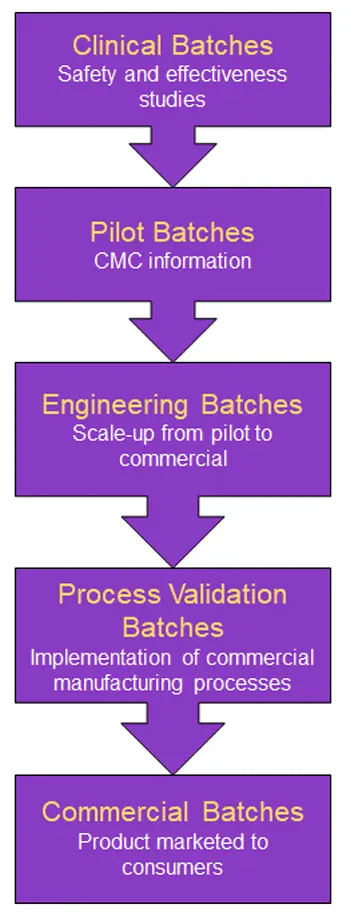
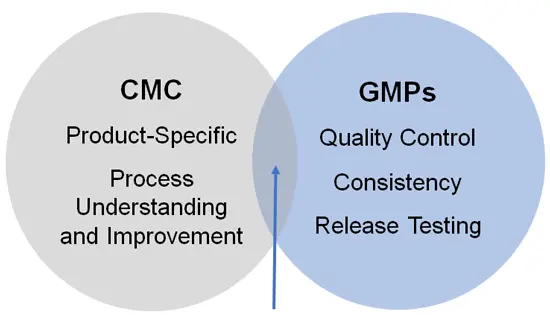
This example frames CMC support as the link between analytical characterization and control strategy. CMC information must support identity, strength or potency, quality, and purity of the drug substance and drug product. Particle size, polymorphic or solid-state form, batch-release data, and analytical procedure changes may also be relevant as development proceeds. The example is useful because it shows how analytical data become regulatory evidence only when they are connected to specifications, critical quality attributes, stability, manufacturing control, and method lifecycle documentation.
These examples include technical resources, regulatory guidances, or literature relevant to the technique. Download buttons are placed at the bottom-left of each example.
Author: International Council for Harmonisation / FDA
Publication date: 2024
Abstract: FDA notes that ICH Q2(R2) and Q14 describe validation and development principles for analytical procedures used to assess drug substance and drug product quality. These guidances frame FDA expectations for specificity, accuracy, precision, range, robustness, lifecycle management, and fit-for-purpose method evidence.
Author: Gary C. George III, Jason Vanlerberghe, and Stephan X.M. Boerrigter
Publication date: Q1 2026
Abstract: A hybrid workflow uses high-resolution mass spectrometry (HRMS) to provide accurate-mass and formula constraints and microcrystal electron diffraction (MicroED) to provide crystallographic structure evidence for trace impurities that may be difficult to isolate in amounts needed for traditional methods.
Author: Melanie Bevill, Chris Seadeek, Nico Setiawan, Shawn Comella, Blaise Mibeck, and Steef Boerrigter
Publication date: November 2023
Abstract: Solid-form screening and selection connect crystallinity, stability, solubility, hygroscopicity, manufacturability, regulatory needs, and IP objectives. Analytical techniques should therefore be selected according to the development decision rather than a fixed instrument list.
Characterizes density, flow, particle size, moisture response, surface behavior, and morphology to explain powder handling and manufacturing performance.
View techniqueIdentifies crystalline phases and solid forms, measures crystallinity, and tracks polymorph, hydrate, solvate, or salt changes.
View techniqueDetermines molecular and crystal structures from sub-micron crystals when conventional single-crystal analysis is not practical.
View techniqueMeasures melting, glass transitions, crystallization, solvent loss, and decomposition to connect thermal behavior with stability and processing.
View techniqueQuantifies water, distinguishes bound from surface moisture, and evaluates sorption, desorption, hydrate formation, and humidity-driven change.
View techniqueProvides rapid molecular-identification, functional-group, solid-form, mixture, and spatial-distribution evidence using Raman, FTIR, IR imaging, and UV/Vis.
View technique
Tell Triclinic what sample you have, what decision the data must support, what prior data are available, and whether cGMP, release, validation, or regulatory documentation is required.